JUMPER'S KNEE

Pain just below the kneecap that often flares with running, hills, sprinting, or explosive movements.

AT A GLANCE

Pain Area

Pain just below the kneecap

Medical Name

Patellar Tendinopathy

Can you Run?

Sometimes, if pain stays low and the tendon is not worse the next morning

Typical Recovery

Usually 6 to 12 weeks for meaningful tendon rehab, with full tendon recovery often taking longer

Common Onset

Often linked to an increase in hills, speed work, jumping, plyometrics, or gym loading


Can I keep running?

Easy running is sometimes acceptable if tendon pain remains low and the tendon is not worse the next morning. Faster running, hills, and plyometric work usually need a longer runway and often need to be reduced first.


Typical recovery timeline

Mild cases may continue modified running, but tendon rehab commonly takes 6 to 12 weeks before confidence returns. In many cases, it can take several months before the tendon feels fully robust again.

COMMON SYMPTOMS

  • Pain at the lower part of the kneecap
  • Pain in the tendon just below the kneecap
  • Pain with:
    • hills
    • fast running
    • jumping
    • lunges
    • explosive movements
  • Local tenderness over the tendon
  • Pain that is often worse with high tendon-demand tasks than with easy flat jogging
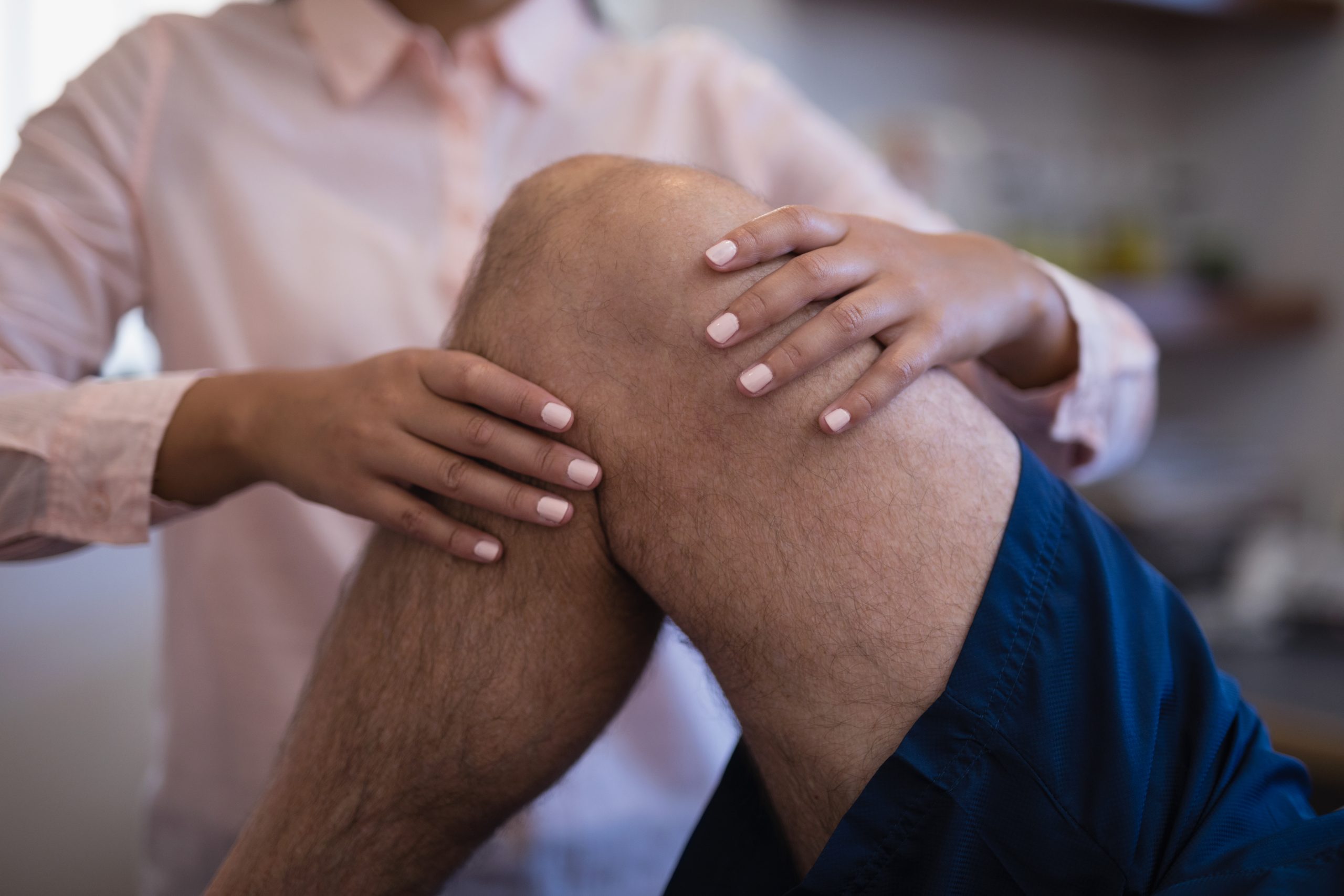
Midsection of female therapist examining knee with senior male patient at hospital ward

WHAT’S ACTUALLY GOING ON?

Patellar Tendinopathy is an overload injury of the tendon below the kneecap.

It’s often associated with jumping sports, but runners get it too, especially when speed work, hills, plyometrics, and gym loading all rise together.

Rather than being a sudden dramatic injury, this is usually a case of the tendon being asked to handle more force and more repeated loading than it is currently prepared for.

CAN YOU STILL RUN WITH IT?

Sometimes, yes, but usually only if the pain stays low, remains predictable, and the tendon is not worse the next morning. Easy flat running is often more manageable, while hills, speed, jumping, or harder sessions tend to flare it more quickly. If the pain is becoming more reactive day to day, or starts affecting stairs, squats, or walking, it usually means the tendon needs a clearer reduction in load. Things that often need adjusting:

01.

Weekly mileage

02.

Speed work

03.

Hills

04.

Long Runs

05.

Running Frequency

COMMON QUESTIONS

This may sound familiar if:

  • You feel pain just below the kneecap
  • The tendon feels sore after hills, speed work, or gym sessions
  • Squats, lunges, or jumping make it worse
  • It feels irritated with faster or more explosive effort, but not always with easy running
  • The area feels tender to press on


A common clue with Jumper’s Knee is that it often behaves more like a load-sensitive tendon than a random knee injury.

This usually shows up when load quietly outruns tendon capacity.

Common reasons include:

  • A large increase in elastic loading
  • More:
    • hills
    • speed work
    • jumps
    • plyometrics
    • gym loading
  • Poor recovery between harder sessions
  • Insufficient quadriceps / tendon load capacity
  • Trying to push quality workouts while already sore


Most of the time, this is not because the tendon is “damaged beyond repair”, it’s because it is overloaded and underprepared for the demands being placed on it.

It’s worth getting help if:

  • the pain keeps coming back
  • stairs or squats are becoming more painful
  • the tendon isn’t improving with reduced load
  • you’re struggling to return to normal running


Get help sooner if you have:

  • a sudden pop
  • a traumatic onset
  • significant swelling
  • major loss of knee extension strength
  • pain that feels deep in the joint rather than local to the tendon

HOW TO TREAT JUMPER'S KNEE

Have a look at Liesel's rehab plan to help improve your injury.

noT SURE IF IT'S JUMPER'S KNEE?

Get a clear plan and find out what’s really causing your pain — so you can stop guessing and start moving forward.

Where are you feeling pain?