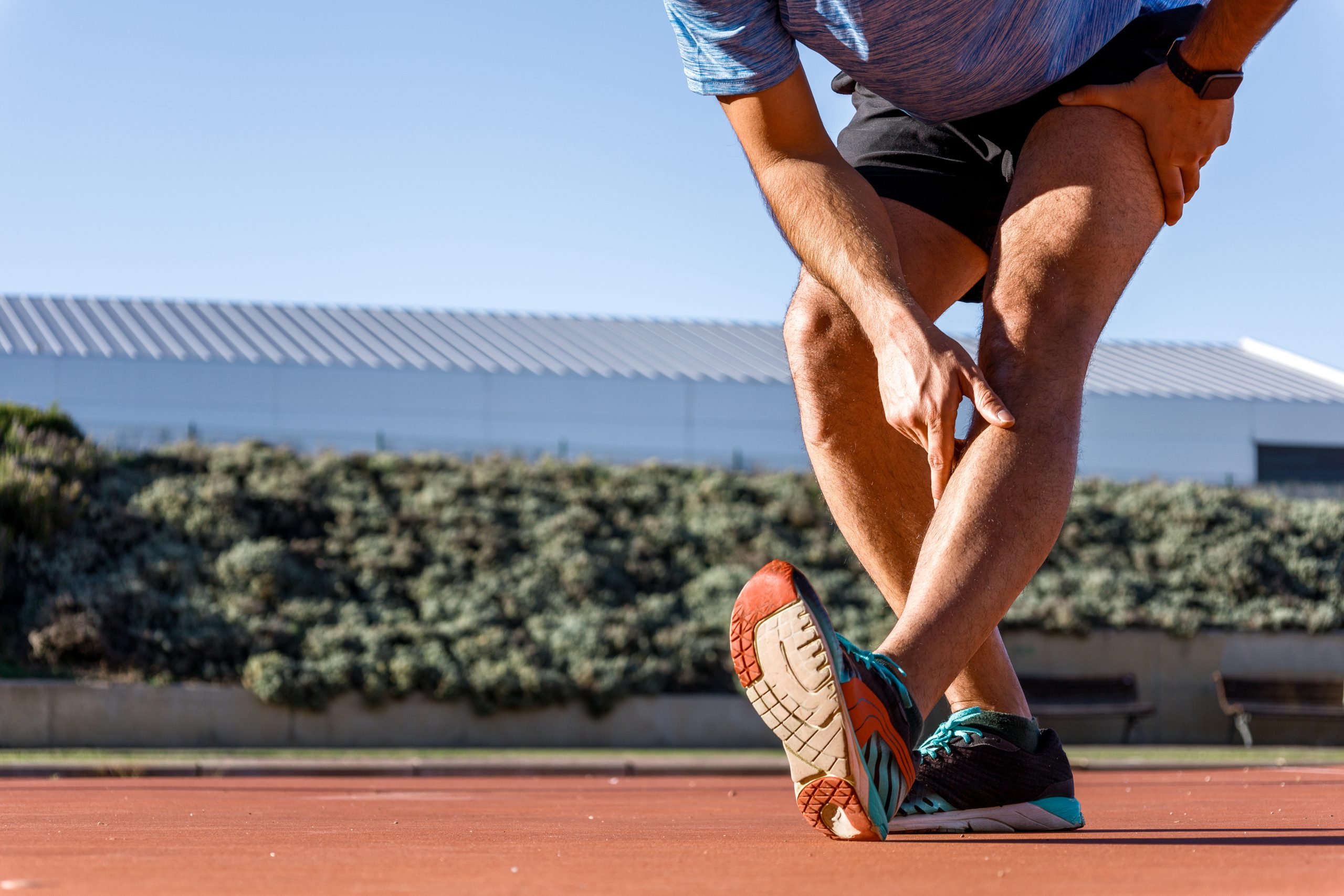
CALF STRAIN

A sudden or sharp pain in the calf that worsens with push off and may feel tight, sore, or weak when walking, climbing stairs, or running.

AT A GLANCE

Pain Area

Back of the lower leg, usually in the calf muscle

Medical Name

Gastrocnemius or Soleus Strain

Can you Run?

Usually not in the early stage, especially if walking or push off is painful

Typical Recovery

Usually 2 to 8 weeks, depending on the severity

Common Onset

Often comes on suddenly during push off, hills, sprinting, or faster running


Can I keep running?

Running is usually not a good idea early on, especially if the calf is painful with walking, push off, stairs, or standing on your toes.

Mild strains may settle quickly, but if you keep trying to run through it too soon, the calf often gets pulled right back into the same cycle.


Typical recovery timeline

Milder calf strains can improve within 2 to 4 weeks, while more significant strains may take 6 to 8 weeks or longer to rebuild fully.

The calf often starts feeling better before it is actually ready for faster running, hills, or longer sessions, which is where many runners go wrong.


COMMON SYMPTOMS

  • A sudden sharp, grabbing, or pulling pain in the calf
  • Tightness or soreness in the back of the lower leg
  • Pain with:
    • push off
    • stairs
    • hills
    • faster running
  • Pain when trying to stand on tiptoes
  • The calf feeling weak, stiff, or protective
  • Sometimes swelling or bruising in more significant strains
Calf Strain

WHAT’S ACTUALLY GOING ON?

A calf strain happens when one of the calf muscles, usually the gastrocnemius or soleus, is overloaded beyond what it can handle.

In runners, this often happens during push off, when the calf is being asked to generate force quickly and repeatedly.

Sometimes it happens suddenly in one moment, and sometimes it builds after the calf has already been overloaded and fatigued.

CAN YOU STILL RUN WITH IT?

Usually not in the early stage. If the calf is painful with walking, stairs, or a single leg calf raise, it is not ready for running yet. Once the pain settles and the calf can tolerate bodyweight loading again, a gradual return can start, but it usually needs to begin with easy flat running, not speed or hills.

COMMON QUESTIONS

This may sound familiar if:

  • You felt a sudden pain or grab in the calf during a run
  • The calf feels tight, sore, or weak afterwards
  • Push off feels uncomfortable or limited
  • You struggle with stairs or standing on your toes
  • The calf feels vulnerable when trying to run again
  • It often flares more with hills or faster efforts


A common clue is that this often feels like the calf is not trustworthy, even if the pain has settled a bit.

Runner’s Knee usually doesn’t come out of nowhere. It tends to show up when load quietly outruns capacity.

Common reasons include:

  • A sudden jump in training volume
  • More hills, speed sessions, or downhill running
  • Reduced quad or hip strength
  • Returning too quickly after a break
  • Running mechanics that increase stress on the knee, like overstriding or low cadence in some runners


Most of the time, this is a “too much, too soon” problem — not a “you’re broken” problem.

It’s worth getting help if:

  • walking is still painful after a few days
  • you cannot do a proper calf raise
  • the calf keeps tightening up again
  • it is not improving steadily
  • you are unsure how to rebuild running safely


Get help sooner if you have:

  • significant bruising
  • marked swelling
  • a clear tearing sensation
  • difficulty weight-bearing
  • calf pain with unusual swelling or warmth

HOW TO TREAT CALF STRAIN

Have a look at Liesel's rehab plan to help improve your injury.

noT SURE IF IT'S CALF STRAIN?

Get a clear plan and find out what’s really causing your pain — so you can stop guessing and start moving forward.

Where are you feeling pain?