
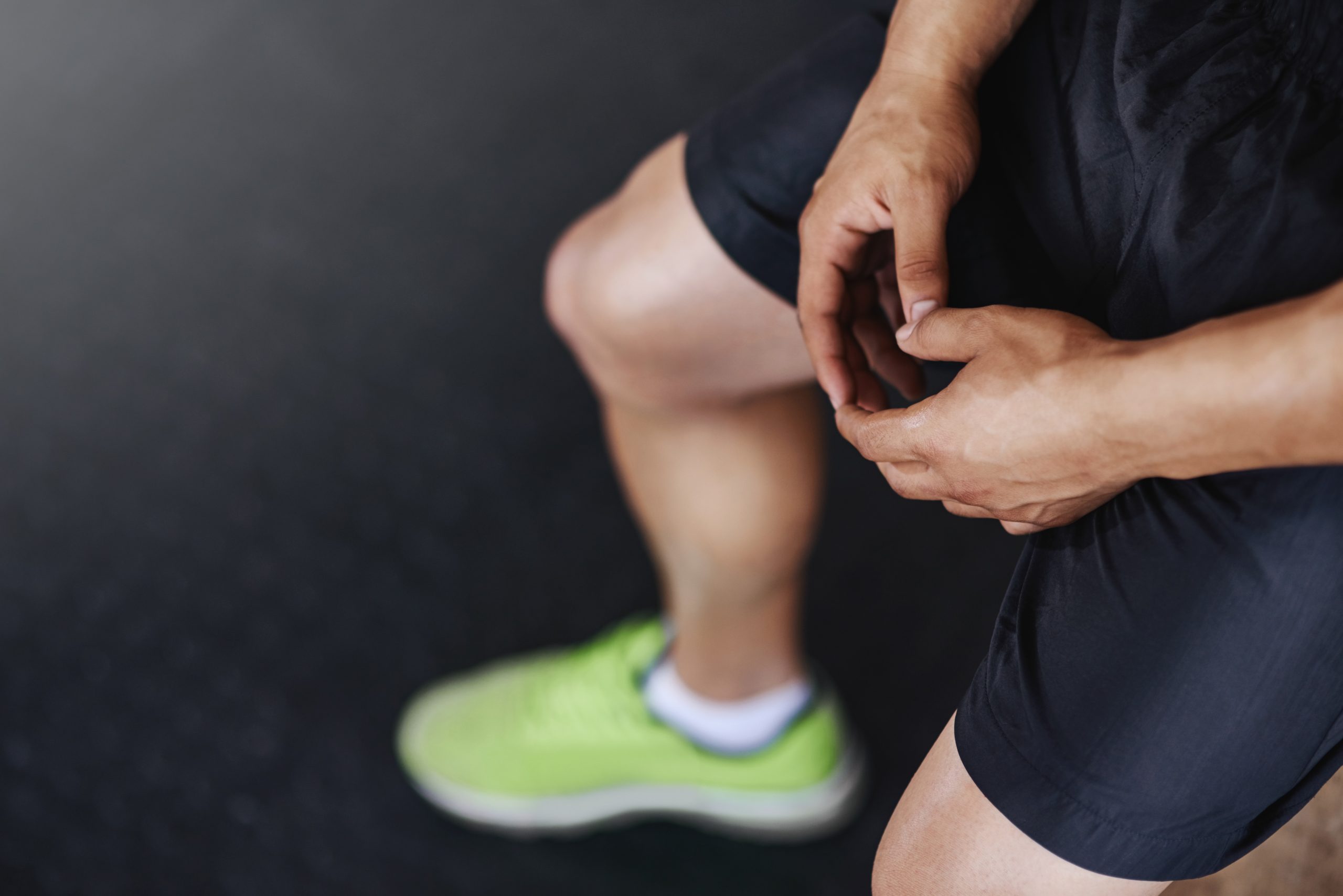

GROIN STRAIN
Pain or pulling through the inner thigh or groin, often worse with sprinting, direction changes, hills, or pushing off.
AT A GLANCE
Pain Area
Medical Name
Can you Run?
Typical Recovery
Common Onset
Can I keep running?
Running is usually not appropriate early on, especially if the groin is painful with walking, lifting the leg, or pushing off.
Trying to run through a fresh groin strain often keeps the muscle irritated and delays proper recovery.
Typical recovery timeline
Milder groin strains may improve within 2 to 4 weeks, while more significant strains often take 6 to 8 weeks or longer to fully rebuild.
The groin may feel better before it is ready for sprinting, hills, or aggressive running again.
COMMON SYMPTOMS
- Pain in the groin or inner thigh
- Pain with:
- sprinting
- pushing off
- changing direction
- hills
- Tightness or pulling through the inner thigh
- Pain when squeezing the legs together
- Discomfort when stretching the groin
- Weakness or tightness through the upper inner thigh
WHAT’S ACTUALLY GOING ON?
A groin strain happens when the adductor muscles on the inner thigh are overloaded beyond what they can tolerate.
These muscles help stabilise the pelvis, control leg movement, and generate force during running and direction changes.
In runners, groin strains commonly happen during faster running, sudden movement, or forceful push off, especially when the muscles are fatigued or underprepared for the load.
CAN YOU STILL RUN WITH IT?
Usually not at first. If walking, pushing off, or changing direction is painful, the groin is not ready for running yet. Once normal walking, controlled strength work, and bodyweight loading feel comfortable again, a gradual return to easy running can begin before progressing back to speed or hills. Things that often need adjusting:
01.
Weekly mileage
02.
Speed work
03.
Hills
04.
Long Runs
05.
Running Frequency
COMMON QUESTIONS
Does this sound like you?
This may sound familiar if:
- You feel pain or pulling through the inner thigh during running
- Sprinting or hills trigger it quickly
- Pushing off feels uncomfortable
- The groin feels tight or vulnerable afterwards
- Stretching the area feels uncomfortable
- The pain flares again when trying to return to running too soon
A common clue is that this often feels unstable or protective rather than simply “tight.”
WHY DO RUNNERS GET THIS?
This usually happens when the groin muscles are asked to generate more force than they are ready for.
Common reasons include:
- sprinting or faster running
- hill running
- sudden changes in direction
- fatigue
- sudden increases in training intensity
- reduced strength through the hips and groin
Often the muscles were already overloaded before the strain finally happened.
When should you get help?
It’s worth getting help if:
- walking is still painful after a few days
- the groin keeps tightening up again
- you cannot run comfortably
- strength is not returning normally
- symptoms are not steadily improving
Get help sooner if you have:
- major bruising
- significant weakness
- sharp groin pain
- difficulty weight-bearing
- severe pain that worsens quickly
Groin strains can become long lasting if runners return to speed and harder running too quickly.
HOW TO TREAT GROIN STRAIN
Have a look at Liesel's rehab plan to help improve your injury.