
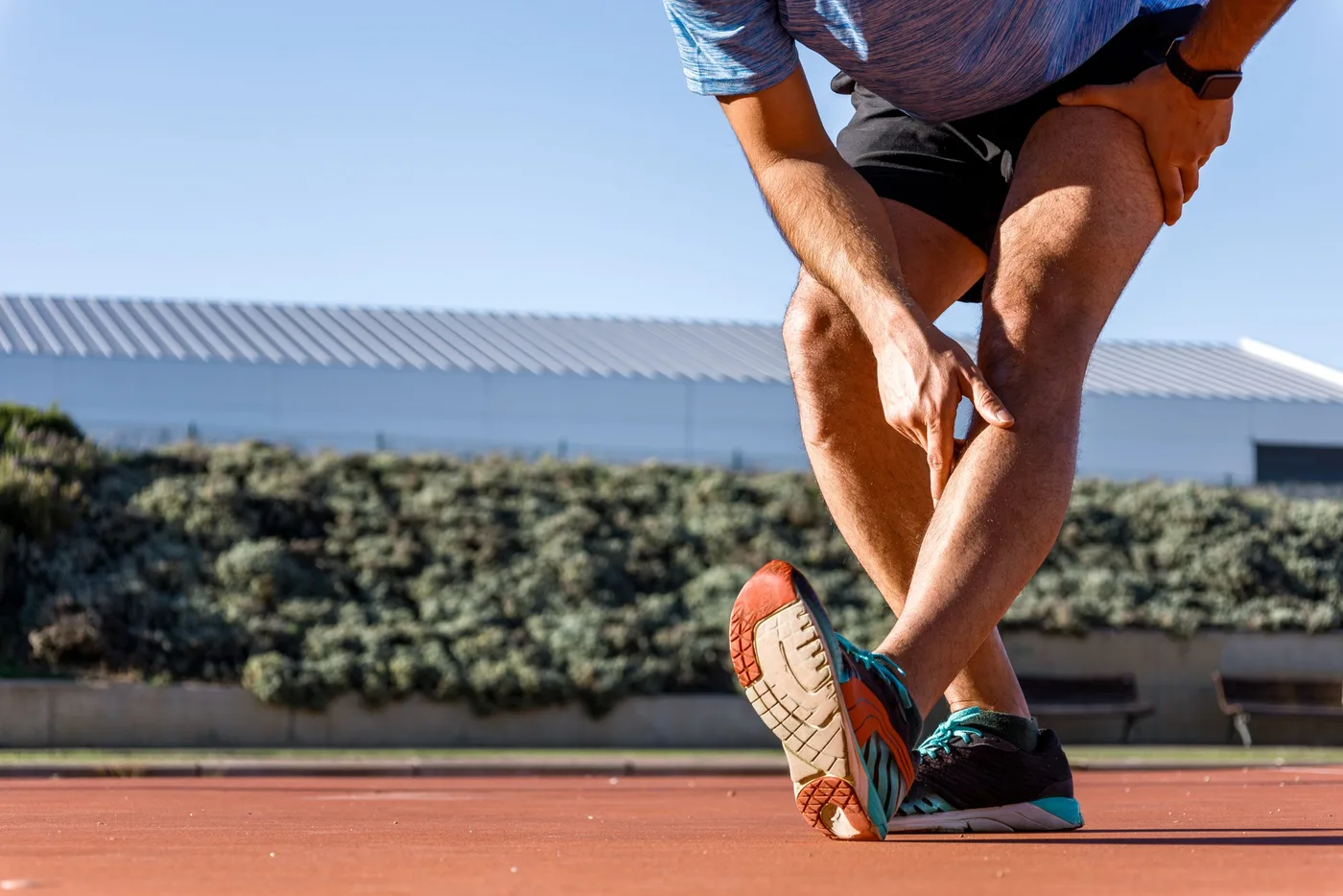
Calf Strain
A sudden or sharp pain in the calf that worsens with push off and may feel tight, sore, or weak when walking, climbing stairs, or running.
Back of the lower leg, usually in the calf muscle
Gastrocnemius or Soleus Strain
Usually not in the early stage, especially if walking or push off is painful
Usually 2 to 8 weeks, depending on the severity
Often comes on suddenly during push off, hills, sprinting, or faster running
Can I Keep Running?
Running is usually not a good idea early on, especially if the calf is painful with walking, push off, stairs, or standing on your toes. Mild strains may settle quickly, but if you keep trying to run through it too soon, the calf often gets pulled right back into the same cycle.
Typical Recovery Timeline
Milder calf strains can improve within 2 to 4 weeks, while more significant strains may take 6 to 8 weeks or longer to rebuild fully. The calf often starts feeling better before it is actually ready for faster running, hills, or longer sessions, which is where many runners go wrong.
What's Actually Going On?
A calf strain happens when one of the calf muscles, usually the gastrocnemius or soleus, is overloaded beyond what it can handle.
In runners, this often happens during push off, when the calf is being asked to generate force quickly and repeatedly.
Sometimes it happens suddenly in one moment, and sometimes it builds after the calf has already been overloaded and fatigued.
Common Symptoms
Can You Still Run With It?
Usually not in the early stage.
If the calf is painful with walking, stairs, or a single leg calf raise, it is not ready for running yet.
Once the pain settles and the calf can tolerate bodyweight loading again, a gradual return can start, but it usually needs to begin with easy flat running, not speed or hills.
Things That Often Need Adjusting:
Does This Sound Like You?
- You felt a sudden pain or grab in the calf during a run
- The calf feels tight, sore, or weak afterwards
- Push off feels uncomfortable or limited
- You struggle with stairs or standing on your toes
- The calf feels vulnerable when trying to run again
- It often flares more with hills or faster efforts
Why Do Runners Get This?
Calf strains usually happen when the gastrocnemius or soleus muscle is asked to handle more push-off force or fatigue than it currently has capacity for.
Often, early warning signs like lingering post-run calf tightness or cramping are ignored until a sharper muscle pull occurs.
Worth Getting Assessed If:
- •walking is still painful after a few days
- •you cannot do a proper calf raise
- •the calf keeps tightening up again
- •it is not improving steadily
- •you are unsure how to rebuild running safely
Get Help Sooner If You Have:
- significant bruising
- marked swelling
- a clear tearing sensation
- difficulty weight-bearing
- calf pain with unusual swelling or warmth

A Note From Liesel
“If you are frustrated by calf strain (gastrocnemius or soleus), that makes sense. Running injuries are rarely hard because they are mysterious; they are hard because they interrupt identity, routine and confidence. I want you to remember that steady, boring progress still counts. Every calmer morning, every clean rep, and every sensible comeback run is a step back toward your running life.”
How to Treat Calf Strain
Download Liesel's structured rehabilitation & exercise guide in PDF format.
Download Rehab Plan (PDF)Stop Guessing. Start Moving Forward.
Get a clear clinical diagnosis and a personalised return-to-running plan with Liesel (In-person in Pretoria East or Online via Google Meet).
Book a Consultation