
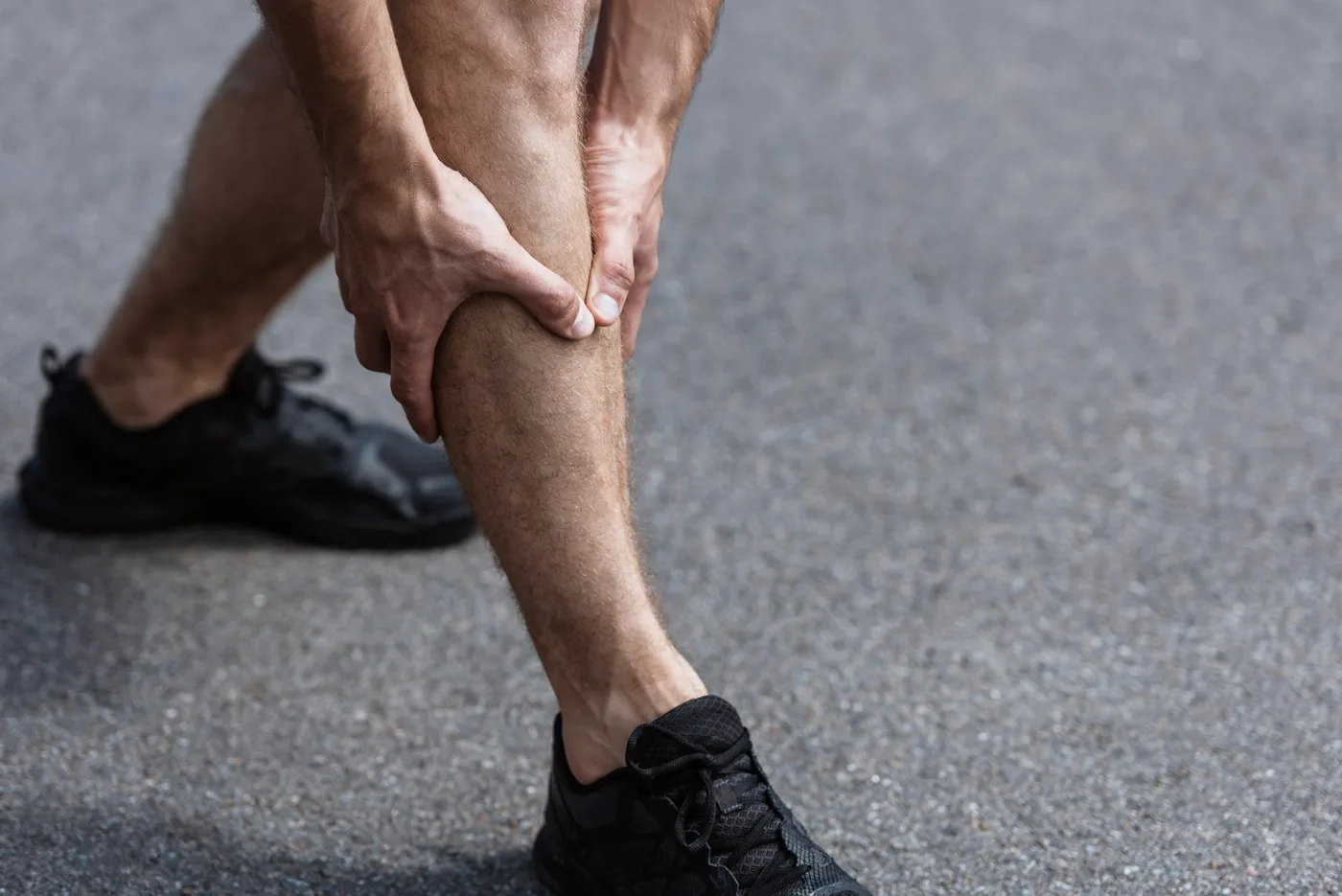
Shin Splints
A dull, aching pain along the inner shin that often shows up during or after running and feels tender to touch.
Inner lower shin
Medial Tibial Stress Syndrome
Sometimes — but only if the pain is more diffuse than pinpoint, there is no limp, and symptoms settle by the next day
Usually 2 to 8 weeks, depending on how irritated it is
Often linked to a sudden increase in mileage, intensity, hills, or impact
Can I Keep Running?
Do not run through shin pain that is getting worse or showing up earlier in each session. Modified running is only sensible if the pain is diffuse rather than pinpoint, there is no limp, and symptoms settle by the next day.
Typical Recovery Timeline
Shin Splints usually take around 2 to 8 weeks to settle, depending on how irritated the shin is. Milder cases may keep some modified running, while more irritable cases often need a clearer reduction in impact until walking and hopping feel better.
What's Actually Going On?
Shin Splints is a running-related overload injury that causes pain along the inner border of the shin bone (tibia).
It sits on the spectrum between an “angry shin” and a more serious bone stress injury, which is why it’s important to catch it early.
In most runners, this happens when the tissues around the shin are being asked to handle more repetitive impact than they’re currently ready for.
Common Symptoms
Can You Still Run With It?
Sometimes, yes — but only if the pain stays more diffuse than sharp, doesn’t get worse as the run goes on, and settles by the next day.
If the pain becomes more focused, sharper, or starts affecting walking or hopping, it usually means the shin needs a clearer reduction in impact.
Easy, flat running may sometimes be tolerated in milder cases, but pushing through worsening shin pain is usually what turns a manageable problem into a bigger one.
Things That Often Need Adjusting:
Does This Sound Like You?
- Your shin feels sore or tender along the inside edge
- It often hurts at the start of a run, then changes as you keep going
- The pain comes back after running
- The area feels irritated when you press along the shin
- The pain is more spread out than one tiny spot
- Your shin has started feeling less tolerant of normal running load
Why Do Runners Get This?
This usually happens when load quietly outruns tissue capacity.
Most of the time, this is a load management and lower-leg capacity problem, not just a random flare-up.
Worth Getting Assessed If:
- •the pain is becoming more focal
- •it hurts to hop
- •it starts hurting with normal walking
- •symptoms are getting worse despite cutting back
- •you’re unsure whether it’s still Shin Splints or something more serious
Get Help Sooner If You Have:
- pain at rest or at night
- sharp, pinpoint tenderness on one specific spot of the shin bone
- pain with hopping or normal daily walking
- symptoms that rapidly worsen over a short period

A Note From Liesel
“If you are frustrated by medial tibial stress syndrome (shin splints), that makes sense. Running injuries are rarely hard because they are mysterious; they are hard because they interrupt identity, routine and confidence. I want you to remember that steady, boring progress still counts. Every calmer morning, every clean rep, and every sensible comeback run is a step back toward your running life”
How to Treat Shin Splints
Download Liesel's structured rehabilitation & exercise guide in PDF format.
Download Rehab Plan (PDF)Stop Guessing. Start Moving Forward.
Get a clear clinical diagnosis and a personalised return-to-running plan with Liesel (In-person in Pretoria East or Online via Google Meet).
Book a Consultation