
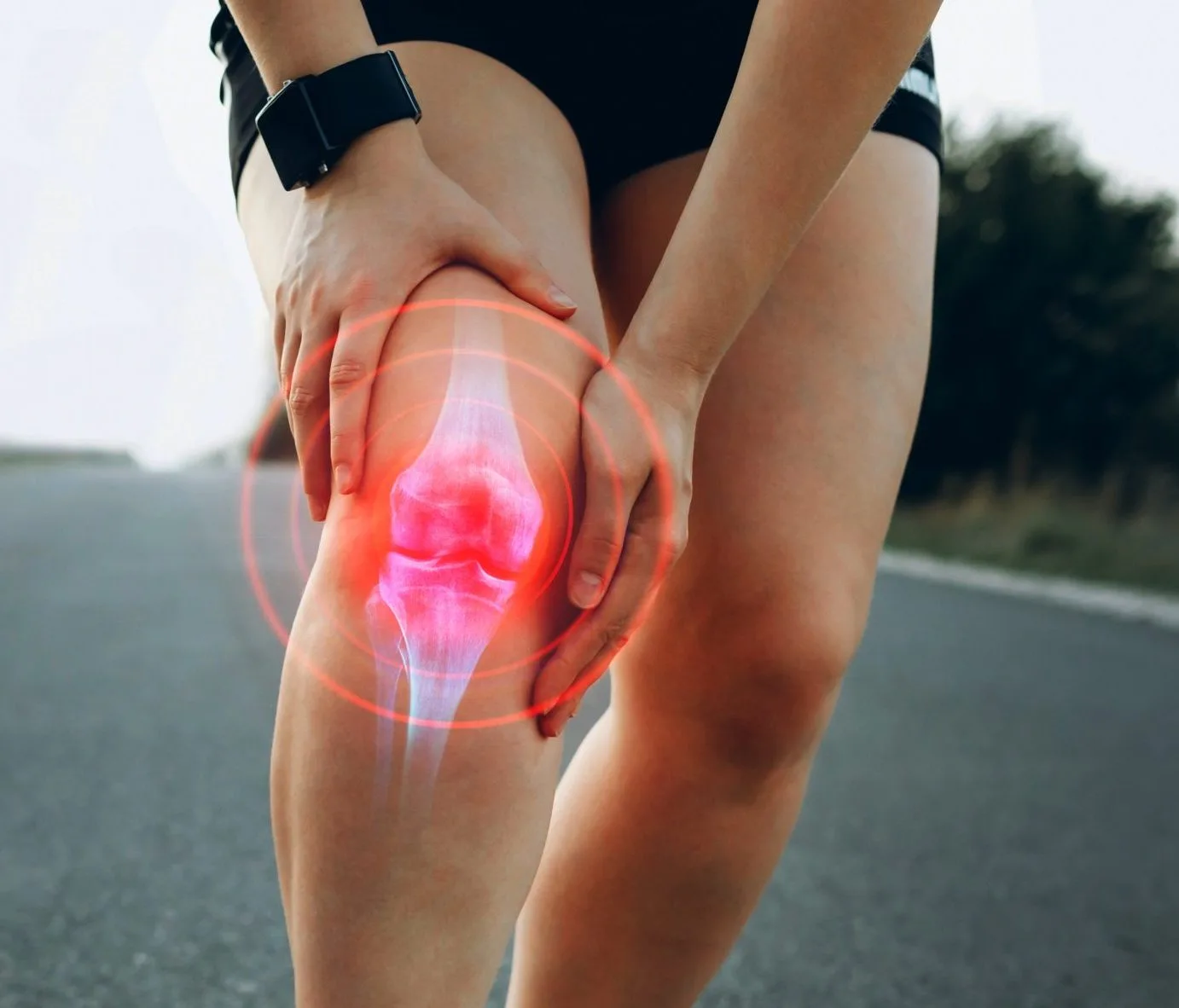
Runner’s Knee
Pain around or behind the kneecap, often worse with stairs, hills, squats, or sitting for long periods.
Runner’s Knee is one of the most common running injuries, especially when training load increases faster than the knee is ready for.
Knee
Patellofemoral Pain Syndrome
Usually yes, modified
2-6 weeks
Gradual
Can I Keep Running?
You can often keep some running if the pain stays mild, doesn’t change the way you run, and settles back to normal by the next day. If stairs, sitting, or easy jogging are all getting progressively worse, you usually need to reduce your load.
Typical Recovery Timeline
Some runners don’t need to stop completely, but many need 2 to 6 weeks of reduced running , with a more complete rebuild often taking 6 to 12 weeks .
What's Actually Going On?
Runner’s Knee is pain coming from the joint between the kneecap (patella) and the thigh bone (femur) .
In runners, this is usually not a dramatic injury and not necessarily a sign that something is badly damaged. More often, it’s a load problem — the kneecap and surrounding tissues are being asked to handle more compression and repetition than they’re currently ready for.
This often shows up when training changes faster than your body can adapt.
Common Symptoms
Can You Still Run With It?
Usually yes — but often with modifications.
Many runners can keep running if symptoms stay manageable and the knee isn’t getting progressively worse.
Things That Often Need Adjusting:
Does This Sound Like You?
- Pain around or behind the kneecap
- Pain that builds with stairs, hills, speed work, or downhill running
- Discomfort after sitting for too long
- A knee that feels irritated rather than unstable
- Mild stiffness, but usually not major swelling
Why Do Runners Get This?
Runner’s Knee usually doesn’t come out of nowhere. It tends to show up when load quietly outruns capacity.
Most of the time, this is a “too much, too soon” problem — not a “you’re broken” problem.
Worth Getting Assessed If:
- •Symptoms last longer than 2 to 3 weeks
- •The knee starts to swell
- •You struggle to go down stairs
- •Running is becoming more painful instead of better
Get Help Sooner If You Have:
- Locking
- Instability / giving way
- Significant swelling
- A major twist injury
- Trouble fully straightening the knee
- Sharp pain focused on one spot rather than general kneecap pain

A Note From Liesel
“I have met so many runners who treated this like a tiny annoyance until stairs, car rides and race week all became miserable. The ones who do best are rarely the toughest; they are the ones who listen early, get stronger, and stop negotiating with pain that keeps sending the same message.”
How to Treat Runner’s Knee
Download Liesel's structured rehabilitation & exercise guide in PDF format.
Download Rehab Plan (PDF)Stop Guessing. Start Moving Forward.
Get a clear clinical diagnosis and a personalised return-to-running plan with Liesel (In-person in Pretoria East or Online via Google Meet).
Book a Consultation