
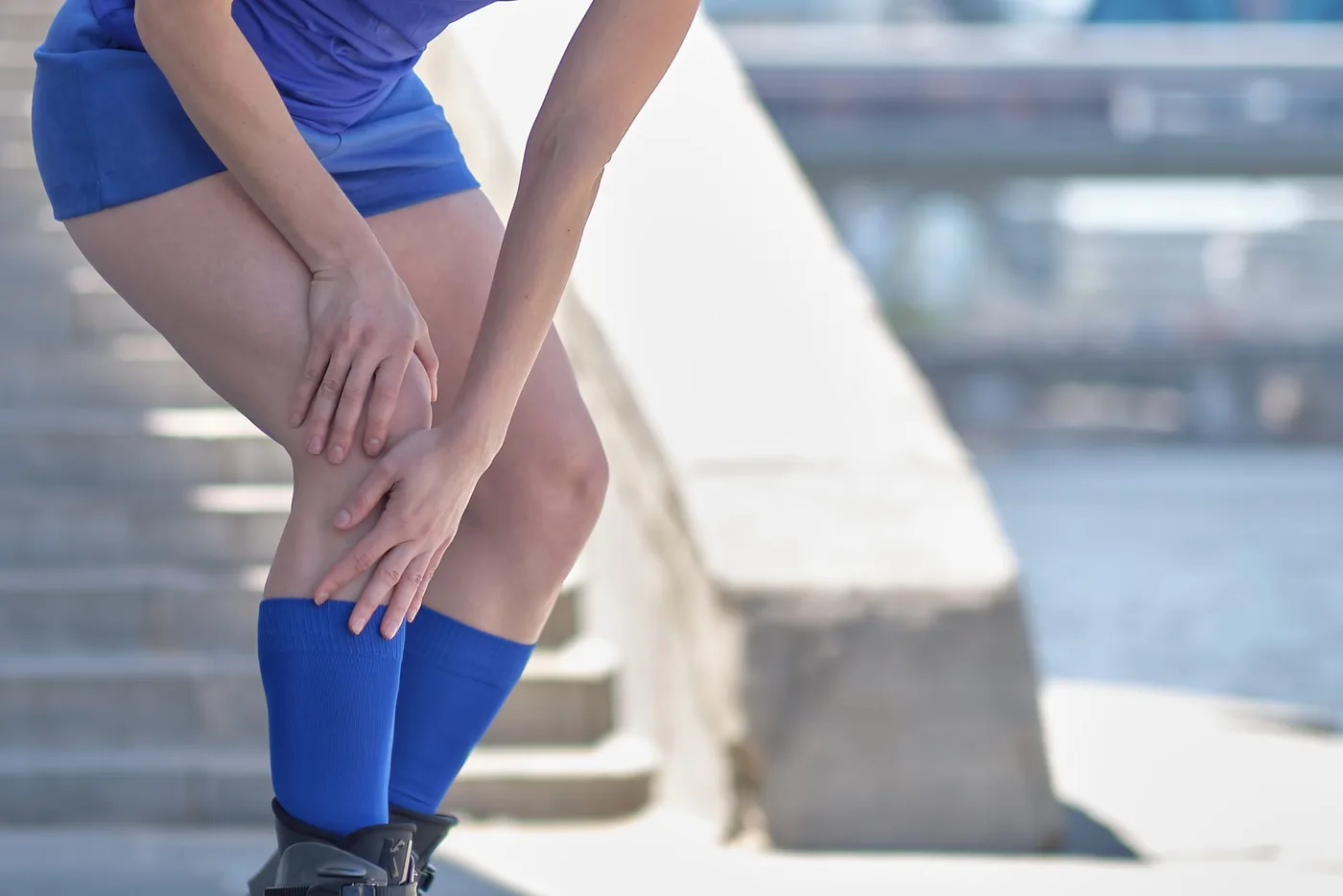
Meniscus Injury
Deep knee pain with catching, clicking, or stiffness, often worse with twisting, bending, or loading the knee.
Deep inside the knee joint
Meniscal Irritation / Meniscus Tear Pattern in Runners
Sometimes — but only if the knee is not locking, swelling, or giving way
Can range from a few weeks to several months, depending on how irritated the knee is and whether symptoms are mechanical
Often linked to twisting, bending, loading the knee under rotation, or an irritated knee that gradually becomes more reactive
Can I Keep Running?
Some runners can continue a small amount of easy running if the knee is not locking, giving way, or becoming more swollen afterwards. But if running causes sharp joint pain, catching, or a sense that the knee is not moving properly, it usually needs a clearer reduction in load. If twisting, stairs, or even walking are becoming more uncomfortable, you should not try to “push through” it.
Typical Recovery Timeline
Recovery can vary a lot depending on the severity, irritability, and whether symptoms are mechanical. Some runners settle within a few weeks with the right load management and rehab. Others, especially if the knee is repeatedly catching, swelling, or locking, may need a much longer process and professional assessment. A good rule: if the knee is not improving steadily, it needs a closer look.
What's Actually Going On?
The meniscus is a piece of cartilage inside the knee that helps with shock absorption, stability, and load distribution.
In runners, meniscus irritation is not always a dramatic “tear” from one big moment. Sometimes it behaves more like an irritated structure inside the knee that has become sensitive to twisting, compression, or repeated loading.
This means the knee may feel sore, stiff, or mechanically “off”, especially when the joint is irritated enough to stop moving smoothly.
Common Symptoms
Can You Still Run With It?
Sometimes, but only if the knee is staying stable, predictable, and mechanically normal. If the knee starts catching, feeling blocked, or changing the way you move, it usually means running is not the right tool right now.
Easy flat running may sometimes be tolerated in milder cases, but twisting, downhill, stairs, and loaded knee bending usually irritate it more quickly.
Things That Often Need Adjusting:
Does This Sound Like You?
- Your knee feels sore deep inside, not just around the kneecap
- It clicks, catches, or feels stiff
- Twisting or turning makes it worse
- Bending the knee deeply feels uncomfortable
- The knee sometimes feels “not quite right” when loading it
- It flares more with stairs, squats, or awkward movement
Why Do Runners Get This?
Meniscus irritation can happen for a few different reasons.
Sometimes this starts with one awkward moment. Other times, it builds gradually when the knee is no longer tolerating load well.
Worth Getting Assessed If:
- •the knee is locking
- •it feels like it might give way
- •it’s swelling regularly
- •you can’t fully bend or straighten it
- •the pain is becoming more mechanical instead of improving
Get Help Sooner If You Have:
- a twist injury followed by swelling
- a blocked knee
- repeated catching or locking
- pain deep in the joint that is not settling
- difficulty walking normally

A Note From Liesel
“If you are frustrated by meniscal irritation / meniscus tear pattern in runners, that makes sense. Running injuries are rarely hard because they are mysterious; they are hard because they interrupt identity, routine and confidence. I want you to remember that steady, boring progress still counts. Every calmer morning, every clean rep, and every sensible comeback run is a step back toward your running life.”
How to Treat Meniscus Injury
Download Liesel's structured rehabilitation & exercise guide in PDF format.
Download Rehab Plan (PDF)Stop Guessing. Start Moving Forward.
Get a clear clinical diagnosis and a personalised return-to-running plan with Liesel (In-person in Pretoria East or Online via Google Meet).
Book a Consultation